 Loutra
Why can't I sleep after quitting smoking?
By Loutra · Sources (10)
The short answer
Because broken sleep is a withdrawal symptom, not a character flaw. The NHS lists "trouble sleeping" among the things nicotine withdrawal does, and up to 42% of people who quit report insomnia. It is worst in the first week and especially the first three days; withdrawal runs 3 to 4 weeks on average. There is also a second cause that almost nobody mentions: quitting slows down how fast your body clears caffeine. Three weeks in, on exactly the same coffee, blood caffeine reaches 203% of what it was.
It is on the list. That is the first thing worth knowing.
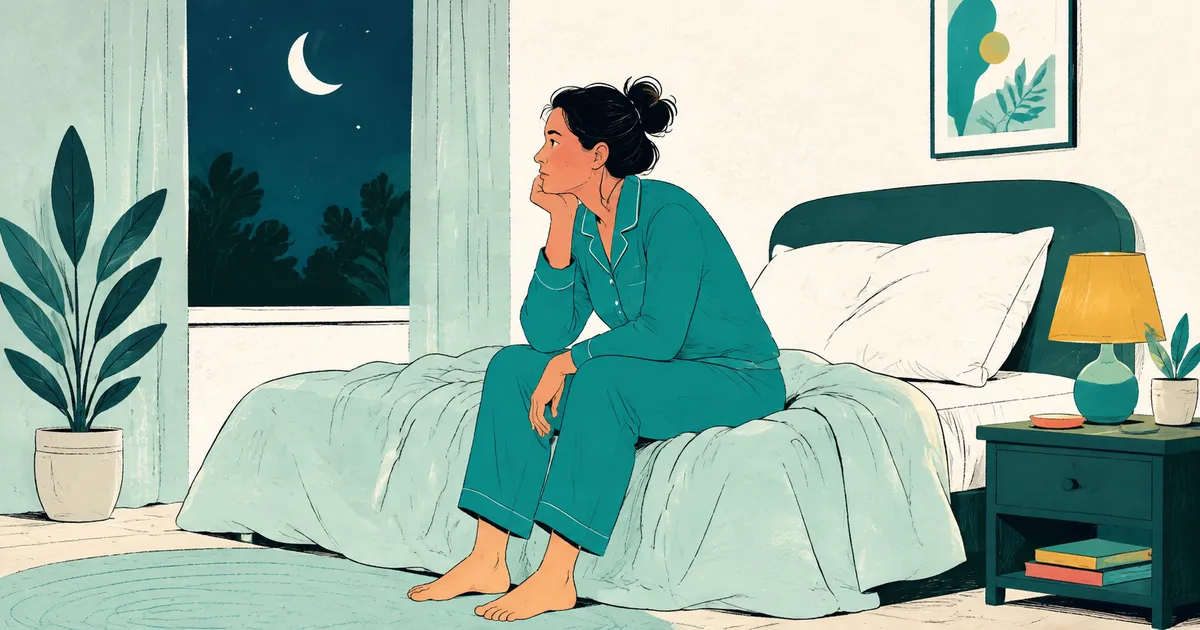
At 3am on day four, lying there fully awake, the temptation is to read it as a verdict — that you are the one person whose body reacts badly to doing the right thing. The NHS names the symptom flatly, alongside irritability and hunger: "trouble sleeping" and "feeling restless". It is expected. Somebody wrote it on a list.
It is also common enough to have been counted. A review in Nicotine & Tobacco Research puts it plainly: "As a clinically verified symptom of nicotine withdrawal, insomnia is reported by up to 42% of abstinent smokers."
The timing follows the rest of withdrawal. The NHS: symptoms can start within a few hours of the last cigarette, are "usually strongest during the first week, especially in the first 3 days", and last 3 to 4 weeks on average, though some people feel them for a few months. That is the same curve as the rest of it — the one this blog has already walked through week by week.
The drug you stopped taking was working all night
Nicotine gets talked about as a daytime thing, because smoking is one. The pharmacology says otherwise. Its plasma half-life "averages about 2 h", which sounds short until you follow it through: that gives "accumulation over 6–8 h (3–4 half-lives) of regular smoking and persistence of significant levels for 6–8 h after cessation". Benowitz and colleagues finish the thought — "if a smoker smokes until bedtime, significant levels should persist all night".
So the nights you are comparing these ones to were not drug-free nights. For years there was a stimulant in your blood at 3am, and whatever sleep you had, you had around it. Quitting removes that in a single evening. The first week is not your sleep breaking; it is your sleep operating for the first time without something it had been getting continuously.
Which cuts both ways, so be honest about the size of it. The same review notes smokers sleep less than non-smokers by 13.3 and 14.0 minutes of total sleep time in the studies it cites. Thirteen minutes. That is not "smoking was destroying your sleep and now you are free". What you are feeling is the removal itself, and the removal is temporary.
Your coffee is now about twice as strong
This is the part left out of every list of quit-smoking sleep tips, and it may be doing more of the damage than the nicotine. Tobacco smoke speeds up the body's clearance of caffeine — a systematic analysis of the caffeine pharmacokinetics literature calls smoking's effect on caffeine elimination "consistent and reproducible" across more than fifty years of studies. Stop smoking and clearance falls back. If the number of coffees stays the same, the dose does not.
Somebody measured exactly this. Swanson and colleagues took 162 caffeine-using smokers out of American Lung Association cessation programmes and followed them for three weeks past their quit date. Among those who quit smoking and kept their caffeine, concentrations rose steadily across the three weeks and reached 203% of baseline. An earlier review by the same group found the levels stay elevated "for as long as 6 months".
Then comes the sentence that should change how you read your own week. Reviewing 86 studies of nicotine withdrawal, caffeine withdrawal and caffeine toxicity, the authors conclude that the symptoms are "similar enough to be confused", and that what gets reported as nicotine withdrawal "may be a mixture of nicotine withdrawal and caffeine toxicity". Restlessness, irritability, a heart going too fast at midnight, and not being able to get to sleep are on both lists. You may be blaming the cigarettes for what the 4pm coffee is doing.
One correction, because the effect is slower than it sounds. When ten coffee-drinking smokers were made to abstain for four days, their blood caffeine did not rise significantly and caffeine did not make their withdrawal worse. This builds over weeks. If night two is bad, that one is nicotine.
And the obvious fix has been tested. Read the result first.
"Cut the caffeine when you quit" is the advice that follows naturally, and it happens to be the thing Swanson's study was built to test: half the clinics were assigned to caffeine abstinence, half carried on. It did not work. No differences between the groups on withdrawal symptoms beyond fatigue and stimulation, and no difference in cessation success at 16 days, 6 months or 12 months. The people who gave up caffeine reported more fatigue in the first three days — which is what a second withdrawal, stacked on the first, looks like.
So both things are true at once. Your caffeine dose really has roughly doubled without your permission, and quitting caffeine outright on the same day as cigarettes is not proven to help. Halving the amount, or moving the last cup to the morning, changes the dose without opening a second front.
If you wear a patch, the patch is a suspect
The largest safety review of nicotine replacement therapy pooled 120 studies covering 177,390 people. In the 19 randomised trials that reported it, the nicotine patch raised the risk of insomnia: odds ratio 1.42 (95% CI 1.21–1.66). In the observational half of the same review, insomnia turned up in 11.4% of people using NRT.
That is not an argument against NRT, which is one of the few things that reliably works. It is an argument for noticing which product you are on. The NHS describes the two formats without ceremony: "You can wear a 24-hour patch all the time, to help with cravings when you wake up, or a 16-hour patch for while you're awake." The choice is designed in — and the trade runs both ways, which makes it a conversation rather than a decision taken at midnight:
- 24hNicotine through the night. Easier first hour of the morning — and a plausible reason you are staring at the ceiling.
- 16hNothing overnight. Better odds on sleep, at the price of waking up already in withdrawal.
- AskA pharmacist or a stop smoking service can change the format or the strength for free. It is a thirty-second question with a real answer.
It gets better on a scale of months, not nights
Here is the honest timeline, and it is longer than most pages selling a sleep tip will admit. The review's summary of the evidence: "sleep deficits in the form of longer sleep latency, decreased sleep duration and efficiency are likely in the first weeks of quitting, but that these deficits are ameliorated 3–12 months after quitting."
Weeks of it, then months of gradual repair. Not one rough Tuesday.
It matters beyond comfort, too. In the same review, smokers who reported insomnia symptoms before their quit date had 11% greater odds of relapsing three months later (aOR 1.11, 95% CI 1.01–1.22). Small, self-reported, observational, and the confidence interval nearly touches 1 — so do not read a bad night as a prediction. Read it as a reason to treat sleep as part of the attempt rather than an inconvenience you absorb quietly.
If the nights are genuinely wrecking you, that is what a free local NHS Stop Smoking Service is for: they can switch your NRT format, adjust the strength, or point you elsewhere. An app cannot do any of that, and this one will not pretend it can — Loutra counts the days, keeps the history through a bad one, and prescribes nothing.
Questions people ask
How long does insomnia last after quitting smoking?
The NHS puts nicotine withdrawal at 3 to 4 weeks on average, strongest in the first week and especially the first 3 days, with some people feeling it for a few months. Sleep specifically takes longer than that to settle: a review in Nicotine & Tobacco Research concludes that longer time to fall asleep and reduced sleep duration are likely in the first weeks after quitting and are ameliorated 3 to 12 months after quitting.
Does quitting smoking make caffeine stronger?
Effectively yes. Smoking speeds up how quickly the body clears caffeine, and stopping reverses that. In a study of 162 caffeine-using smokers, those who quit smoking and did not change their caffeine intake reached 203% of their baseline caffeine concentration three weeks after their quit date. Nothing about the coffee changed. The dose did.
Should I give up coffee at the same time as cigarettes?
The one trial that tested this does not support it. Smokers randomised to complete caffeine abstinence did no better than those who kept drinking caffeine, at 16 days, 6 months or 12 months, and they reported more fatigue in the first 3 days. Reducing the amount or moving it earlier in the day is a smaller change than stopping dead, and it does not add a second withdrawal to the first week.
Should I take my nicotine patch off at night?
It is a real option and the products are built for it: the NHS describes a 24-hour patch worn all the time to help with cravings on waking, and a 16-hour patch for while you are awake. A meta-analysis of 120 studies covering 177,390 people found the patch raised the risk of insomnia (OR 1.42, 95% CI 1.21 to 1.66). The trade-off is that a night without nicotine usually means a harder first hour in the morning, so it is worth asking a pharmacist or a stop smoking service rather than deciding alone.
Do you get vivid dreams after quitting smoking?
A lot of people report them, but there is no reliable figure to quote. The largest safety review of nicotine replacement therapy — 120 studies, 177,390 people — counted insomnia as a sleep-related adverse event and did not report dream-related effects at all. So any page giving you a percentage for vivid dreams is not getting it from the trial evidence.
Does sleeping badly make me more likely to start smoking again?
There is an association, and it is a small one. Smokers who reported insomnia symptoms before their quit date had 11% greater odds of relapsing three months later than those who did not (aOR 1.11, 95% CI 1.01 to 1.22). That is self-reported, observational, and the confidence interval nearly touches 1. It is not a reason to panic about one bad night — it is a reason to treat sleep as part of the quit rather than as a side issue.
Loutra is free on the App Store
An otter that’s counting on you, a daily check-in, and a breathing round for the minutes that are hard.

Sources
- NHS — Managing nicotine withdrawal symptoms (Better Health) — nhs.uk
- Patterson F, Grandner MA, Malone SK, et al. — Sleep as a Target for Optimized Response to Smoking Cessation Treatment. Nicotine & Tobacco Research 2019;21(2):139–148 — pmc.ncbi.nlm.nih.gov
- Benowitz NL, Hukkanen J, Jacob P 3rd — Nicotine chemistry, metabolism, kinetics and biomarkers. Handbook of Experimental Pharmacology 2009;(192):29–60 — pmc.ncbi.nlm.nih.gov
- Swanson JA, Lee JW, Hopp JW, Berk LS — The impact of caffeine use on tobacco cessation and withdrawal. Addictive Behaviors 1997;22(1):55–68 — pubmed.ncbi.nlm.nih.gov
- Swanson JA, Lee JW, Hopp JW — Caffeine and nicotine: a review of their joint use and possible interactive effects in tobacco withdrawal. Addictive Behaviors 1994;19(3):229–256 — pubmed.ncbi.nlm.nih.gov
- Grzegorzewski J, Bartsch F, Köller A, König M — Pharmacokinetics of Caffeine: A Systematic Analysis of Reported Data for Application in Metabolic Phenotyping and Liver Function Testing. Frontiers in Pharmacology 2022;12:752826 — pmc.ncbi.nlm.nih.gov
- Oliveto AH, Hughes JR, Terry SY, et al. — Effects of caffeine on tobacco withdrawal. Clinical Pharmacology & Therapeutics 1991;50(2):157–164 — pubmed.ncbi.nlm.nih.gov
- Mills EJ, Wu P, Lockhart I, Wilson K, Ebbert JO — Adverse events associated with nicotine replacement therapy (NRT) for smoking cessation: a systematic review and meta-analysis of one hundred and twenty studies involving 177,390 individuals. Tobacco Induced Diseases 2010;8:8 — pmc.ncbi.nlm.nih.gov
- NHS — Quit smoking with nicotine replacement therapies (NRTs) — nhs.uk
- NHS — Find your local stop smoking service — nhs.uk